
Delivery Transparency to Reduce Cart Abandonment
Cart abandonment is one of the biggest challenges for Shopify store owners. A shopper visits a product page, likes the product, adds an item to the cart, and then leaves before completing the order. In many cases, the product is not the real problem. The real problem is uncertainty.
Online shoppers expect clear information before they buy. They want to know the final cost, the delivery date, the return policy, and whether the business looks reliable. If delivery information is missing, unclear, or shown too late, buyers may hesitate and leave without ordering.
Delivery transparency helps remove that hesitation. When shoppers can see an estimated delivery date before payment, they feel more confident about the purchase. This can improve trust, support a smoother checkout process, and help a Shopify store reduce lost sales.
For online shopping, delivery clarity is no longer optional. Your customers expect simple, visible, and realistic delivery details before they pay. If the delivery timeline is clear from the beginning, the buying journey feels safer and easier.
What Is Cart Abandonment?
Cart abandonment happens when a shopper adds a product to their cart but leaves the website before completing the order.
This is a common ecommerce problem. It can happen because of unexpected costs, slow delivery, unclear shipping details, a confusing return policy, limited trust signals, or too many steps before payment.
The impact of cart abandonment can be serious because every incomplete order means possible lost revenue. Even a small improvement in the cart abandonment rate can make a meaningful difference for an ecommerce business.
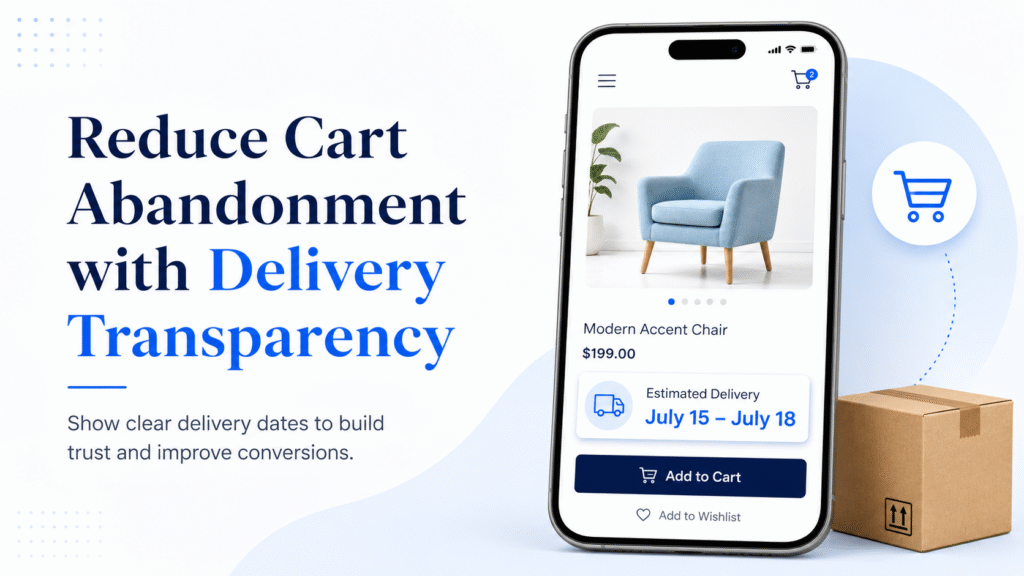
For example, if one store says “Shipping calculated later” and another store says “Estimated delivery: July 15–18,” the second store usually feels more trustworthy. Clear delivery details help shoppers understand what will happen after they place an order.
Why Customers Leave Before Checkout
Shoppers usually leave before checkout when something creates doubt. It may be unclear shipping costs, a long form, missing delivery estimates, or not knowing when the package will arrive.
In many cases, buyers do not leave because they dislike the product. They leave because they do not feel ready to complete the order.
This is where delivery transparency becomes important. A clear delivery message gives buyers one more reason to continue instead of leaving the page. It answers a key question before payment begins: “When will I receive this?”
When delivery information is easy to find, shoppers do not need to guess. They can make a decision faster and move forward with more confidence.
How to Reduce Cart Abandonment Before Checkout
Many store owners ask how to reduce cart abandonment before shoppers reach the final payment step. The answer usually starts with removing confusion early in the buying journey. Shoppers may leave because shipping costs are unclear, delivery estimates are missing, or the buying process feels too long. When people do not understand what will happen after they order, they may decide to abandon their cart. One of the simplest ways to reduce cart abandonment is to show clear delivery information before payment. A visible estimated delivery date helps shoppers feel more confident and gives them a reason to continue. If you want to reduce cart abandonment in your Shopify store, do not wait until the final step to explain delivery. Show delivery dates on the product page, cart page, and order confirmation page so buyers understand the full timeline before they pay.
How Delivery Transparency Improves the Checkout Process
Delivery transparency means showing important delivery information before someone places an order. This can include the estimated delivery date, delivery range, processing time, shipping time, cutoff time, weekend rules, and holiday handling. The checkout process becomes smoother when shoppers already understand the delivery timeline. Instead of reaching the final step and wondering about shipping, they already know what to expect. For example, a simple message like this can help: “Estimated delivery: July 15–18.” This is much clearer than saying: “Delivery takes 5–7 business days.” The second message forces shoppers to calculate the date themselves. The first message gives a direct answer. That small difference can make the shopping experience easier and more trustworthy. A smoother checkout experience also helps buyers feel safer. When delivery details, payment methods, and return information are easy to understand, shoppers have fewer reasons to stop before completing the purchase.
Why Estimated Delivery Dates Build Trust
Trust is one of the biggest factors in ecommerce. Buyers cannot touch the product or speak with a salesperson face to face. They rely on the information shown on the website.
A clear estimated delivery date makes the product page feel more professional. It shows that the business understands order fulfillment and cares about setting the right expectation.
For example:
“Order today and get it between July 15–18.”
This message gives shoppers a clear promise. It helps them plan and removes confusion before payment.
A vague message like “Delivery time may vary” does not offer the same confidence. It may make visitors wonder whether the order will arrive late or whether the store has reliable shipping.
When buyers can see delivery details early, they are more likely to trust the buying process.
How Shipping Costs and Delivery Dates Affect Purchase Decisions
Shipping costs and delivery dates have a direct effect on purchase decisions. Even when a product looks attractive, buyers may stop if shipping fees appear too late or the delivery date is unclear.
A simple delivery message can lower hesitation. When this message appears near the Add to Cart button, it supports the decision-making moment.
Clear shipping information also makes the store feel more honest. Instead of surprising buyers at the final step, the product page gives useful details early.
For example, a store can show:
“Estimated delivery: July 15–18.”
“Free shipping on orders over $50.”
“Order within 3 hours for faster processing.”
These details help shoppers understand the order timeline, possible shipping costs, and next steps before they continue.
Shopping Cart Abandonment and Delivery Uncertainty
Shopping cart abandonment often happens because buyers do not have enough confidence to complete the order. Sometimes they like the product, but the missing delivery date makes the purchase feel risky.
The customer may wonder if the item will arrive on time, if shipping will take too long, or if there will be extra fees later. These questions create hesitation.
Delivery transparency answers those questions earlier in the journey. It gives clear delivery expectations before buyers move further, which makes the path to purchase easier.
A product page with clear delivery dates feels more helpful than a product page that only gives vague shipping text.
The Role of Delivery Clarity in Online Shopping
Online shopping depends on confidence. People compare products, prices, reviews, shipping times, and return policies before they decide.
If a product page has beautiful images but no delivery information, the buying journey may feel incomplete. Shoppers may like the product but still delay the order because they are unsure about arrival time.
Delivery transparency solves this by giving practical information at the right place. It makes the page more useful and reduces the need for visitors to search for answers.
This is especially important for gifts, fashion items, electronics, beauty products, pet supplies, home decor, and seasonal products. In these cases, delivery timing can affect whether someone buys now or leaves.
Where to Show Delivery Information on a Product Page
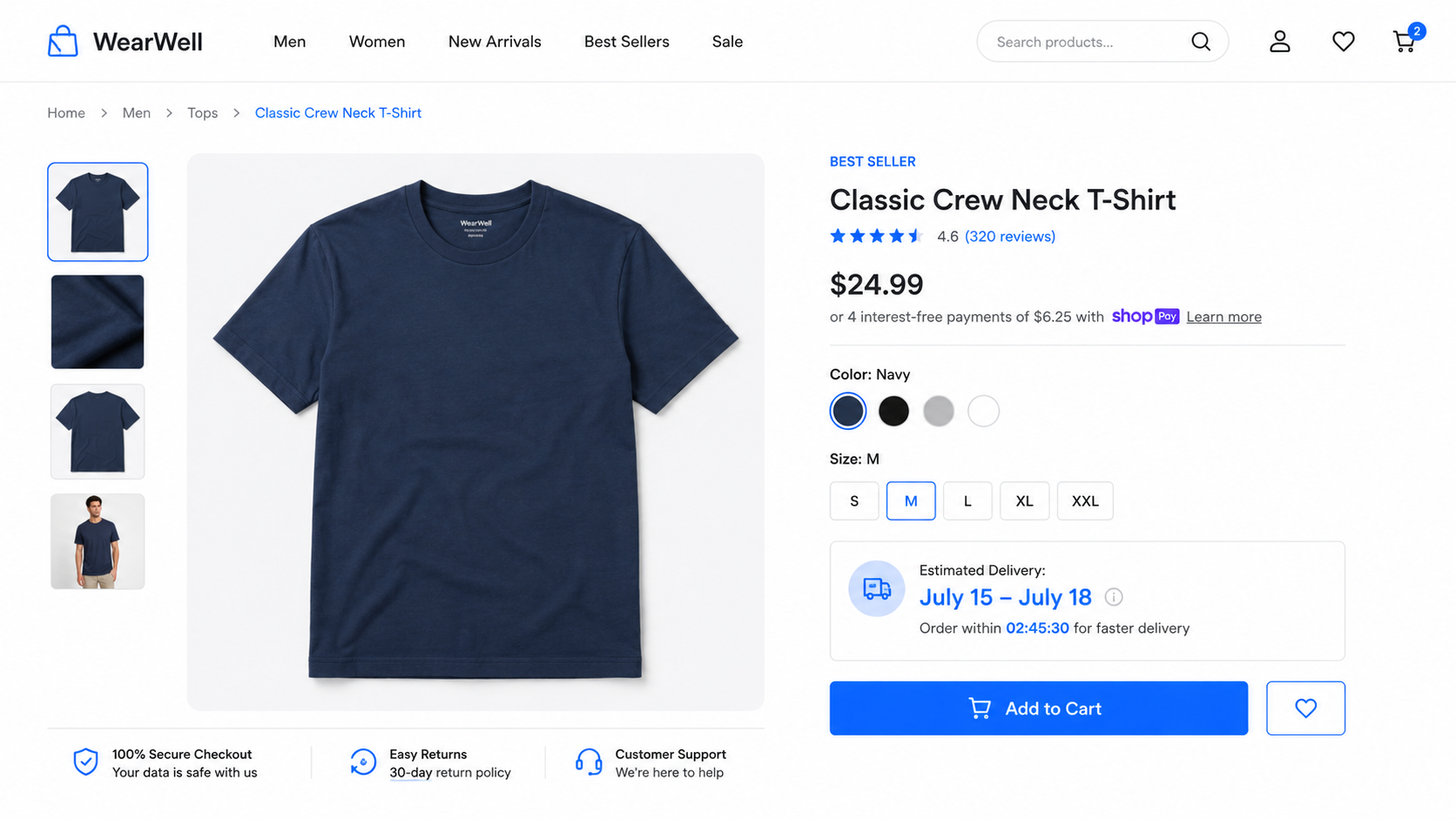
The best place to show delivery information is near the Add to Cart button. This is where shoppers are deciding whether to continue.
A delivery message should be short, clear, and easy to read. It should not distract from the product, but it should be visible enough to answer the delivery question quickly.
Good placements include:
Product page near the Add to Cart button.
Cart page near the order summary.
Checkout page near shipping details.
Order confirmation page.
Post-purchase email.
For reducing abandoned orders, the product page and cart page are especially important. These are the moments when buyers decide whether to continue or leave.
Key Delivery Details a Shopify Store Should Show
To reduce cart abandonment, a Shopify store should show the most important delivery details clearly.
Useful details include:
Estimated delivery date.
Delivery range.
Processing time.
Shipping time.
Order cutoff time.
Weekend and holiday rules.
Product-specific delivery estimates.
Country or region-based delivery rules.
These details do not need to be complicated. The goal is to make delivery expectations easy to understand.
For example:
“Order within 4 hours and get it between July 15–18.”
This message gives shoppers urgency, clarity, and confidence at the same time.
Payment Methods, Trust Signals, and Delivery Clarity
A smooth buying path should feel simple and safe. Secure payment methods, customer reviews, contact details, return policy, and trust badges all help shoppers feel more comfortable.
However, trust signals work better when delivery information is also clear. A product page can look professional, but if the delivery date is missing, buyers may still hesitate.
A guest checkout option can also help because some shoppers do not want to create an account before placing an order. But even with a simple buying path, delivery clarity still matters.
When shoppers see trusted payment options, clear delivery dates, and a visible return policy, the buying process feels safer and more complete.
How Clear Delivery Estimates Reduce Customer Questions
Unclear delivery information does not only affect sales. It can also increase support messages after purchase.
Common questions include:
“Where is my order?”
“When will my order arrive?”
“Why has my order not shipped yet?”
“Can I get this before the weekend?”
“Is my package delayed?”
These questions take time to answer. They also show that shoppers did not fully understand the delivery timeline before buying.
Clear delivery estimates set better expectations from the beginning. When buyers already know the expected delivery window, they are less likely to ask repeated shipping questions later.
This helps the business save time and creates a better experience for customers.
How Delivery Transparency Helps Customers to Complete Orders
Delivery transparency helps customers to feel more confident before they place an order. It gives them a clear idea of what happens after payment and when they can expect the package.
When shoppers understand the delivery date, the order feels less uncertain. They do not need to leave the page and search for shipping information elsewhere.
Clear delivery messages also guide customers to make faster decisions. Instead of waiting, comparing, or leaving, they can continue because the most important delivery question is already answered.
This is why delivery clarity is not only a shipping feature. It is part of the full customer experience.
How AIT Estimated Delivery Date Helps Shopify Stores
AIT Estimated Delivery Date helps Shopify merchants show clear delivery information directly on product pages.
Instead of leaving visitors uncertain, the app can display estimated delivery dates, delivery ranges, countdown timers, and delivery timelines in a simple way.
A Shopify store can use the app to show messages like:
“Estimated delivery: July 15–18.”
“Order today and receive it by July 18.”
“Order within 3 hours for faster processing.”
“Shipped by July 12, delivered by July 18.”
These messages help shoppers understand delivery expectations before placing an order.
The app is useful because different products may have different shipping times. Some products may ship faster, some may need more processing time, and some may be affected by weekends or holidays.
With custom delivery rules, merchants can show more realistic delivery dates based on the product, collection, location, or shipping method.
Useful Features for Delivery Transparency
AIT Estimated Delivery Date includes several features that support clear delivery communication.
Estimated Delivery Date Display
The app can show an estimated delivery date or delivery range on the product page. This helps shoppers quickly understand when the order may arrive.
Delivery Timeline
A delivery timeline can show steps such as order placed, shipped, and delivered. This makes the delivery process easier to understand.
Countdown Timer
A countdown timer can show how much time is left to order within a specific delivery window.
For example:
“Order within 2 hours 30 minutes to get it between July 15–18.”
This creates urgency without making the product page feel pushy.
Custom Delivery Rules
Custom rules allow merchants to set different delivery estimates for different products, collections, locations, or shipping conditions.
Weekend and Holiday Settings
Delivery dates can change because of weekends and holidays. Accurate rules help avoid unrealistic delivery promises.
Customizable Widget Design
A delivery widget should match the store design. A clean widget can make the product page more helpful without making it look crowded.
Best Ways to Reduce Cart Abandonment on Shopify
There are many ways to reduce cart abandonment, but the most effective approach is to make the buying path clear, fast, and trustworthy.
Start with the product page. Show the estimated delivery date near the Add to Cart button, make shipping costs easy to understand, and keep the return policy visible. These small details can reduce cart abandonment rates because shoppers get the answers they need before moving forward.
A smooth buying process also matters. Make sure payment methods are easy to find, avoid unnecessary steps, and offer a simple option when possible. If buyers can complete the order quickly, they are less likely to leave.
Delivery transparency should work together with trust badges, reviews, support details, and clear shipping information. When these elements are easy to see, customers to your online store can feel more confident before placing an order.
Why Shoppers Abandon Their Cart
Shoppers abandon their cart when they feel unsure, surprised, or distracted before completing the order. Sometimes the product is good, but the buying journey creates too much doubt.
Common reasons include unclear shipping costs, missing delivery dates, forced account creation, limited payment options, slow pages, and weak trust signals. These issues make it harder for customers to complete the order.
Delivery transparency helps because it answers one of the biggest questions early: when will the order arrive? A clear delivery date can reduce shopping cart abandonment rate by making the buying decision easier.
If the delivery promise is realistic and easy to understand, shoppers are less likely to stop and compare other stores.
Common Mistakes That Increase Cart Abandonment Rate
Some small mistakes can increase the cart abandonment rate without store owners realizing it.
Common mistakes include:
Hiding delivery information until checkout.
Using vague text like “Delivery time may vary.”
Showing shipping costs too late.
Making the return policy hard to find.
Using the same delivery date for every product.
Ignoring weekends and holidays.
Making the form too long.
Not optimizing the product page for mobile users.
Not sending a helpful abandoned cart email.
These mistakes create friction. They make shoppers stop, think, and sometimes leave.
A better approach is to give clear delivery information early and make the buying path as simple as possible.
Mobile Experience and Delivery Transparency
Many shoppers browse and buy from mobile devices. That means delivery information must be easy to see on smaller screens.
If the estimated delivery date is hidden, too small, or far below the Add to Cart button, mobile visitors may miss it.
A mobile-friendly product page should show the delivery date close to the buying area. The message should be short and simple.
For example:
“Estimated delivery: July 15–18.”
This kind of message works well because it is direct, easy to read, and useful.
Small mobile improvements can make a big difference. A clear delivery message can help visitors move from product page to cart with less hesitation.
How to Track Cart Abandonment Rate in Your Store
After adding delivery transparency, track whether the change is improving results. The cart abandonment rate is a useful metric because it shows how many shoppers add items but do not complete the order.
Important metrics to watch include add-to-cart rate, order completion rate, conversion rate, delivery-related support questions, and cart abandonment rates by device.
If shoppers ask fewer delivery questions and more orders are completed, your delivery message is likely helping. According to common ecommerce best practices, clear information before payment can reduce uncertainty and improve the buying journey.
You can also compare desktop and mobile behavior. If mobile users still leave often, check whether the delivery message is visible near the Add to Cart button and easy to read on a small screen.
Reduce Shopping Cart Abandonment with Clear Delivery Dates
To reduce shopping cart abandonment, focus on the information that shoppers need before they pay. Delivery date, shipping cost, return policy, and buying steps should all be easy to understand.
Clear delivery dates help customers move from interest to action. They do not need to guess, search, or contact support before placing an order.
When delivery transparency is added to your product page, cart page, and confirmation page, the buying experience feels more complete.
If you want to reduce cart issues and improve trust, start with the delivery promise. It is one of the easiest ways to make shoppers feel more comfortable.
Quick Checklist Before Publishing
Before publishing a product page, check these points:
Is the estimated delivery date visible?
Is the delivery message close to the Add to Cart button?
Are shipping costs easy to understand?
Is the return policy easy to find?
Is the page mobile-friendly?
Is the delivery range realistic?
Are weekend and holiday rules considered?
Is the message clear for customers?
Does the buying path feel simple?
If you want to make the buying path smoother, start with the information shoppers need most. Delivery date, final cost, and return policy should be easy to find.
Final Thoughts
Cart abandonment is not always caused by a bad product or high price. Many shoppers leave because they do not have enough clear information before payment.
Delivery transparency helps solve that problem.
By showing estimated delivery dates, delivery ranges, timelines, cutoff times, and realistic shipping expectations, Shopify stores can make the buying journey easier and more trustworthy.
A clear delivery message can turn hesitation into action. It helps shoppers understand when the order may arrive and gives them more confidence before payment.
AIT Estimated Delivery Date makes this easier by helping merchants display delivery information directly on product pages.
When shoppers know what to expect, they are more likely to trust the store, continue through your checkout, and complete the order.
FAQs
What is cart abandonment?
Cart abandonment happens when a shopper adds a product to their cart but leaves before completing the order.
How does delivery transparency help?
Delivery transparency gives shoppers clear information about when the order may arrive. This reduces doubt and helps them feel more confident before payment.
What is the best way to reduce cart abandonment?
The best way is to remove uncertainty before payment. Clear delivery dates, visible shipping costs, trusted payment methods, and a simple buying path can help shoppers complete their order.
Where should I show estimated delivery dates?
The best place is near the Add to Cart button on the product page. Delivery details can also appear on the cart page, order confirmation page, and post-purchase email.
Why are estimated delivery dates better than generic shipping text?
A clear date range like “Estimated delivery: July 15–18” is easier to understand than “Delivery in 5–7 business days.” It removes extra calculation for the buyer.
Can AIT Estimated Delivery Date help Shopify stores?
Yes. AIT Estimated Delivery Date helps Shopify merchants show estimated delivery dates, delivery timelines, countdown timers, and custom delivery rules on product pages.